Concerned about your financial well-being?
7029639497 • April 24, 2020
COVID-19 Financial Update for Individuals & Businesses

As COVID-19 continues to affect local communities and global economies, you may have concerns about your financial well-being, your company's financial well-being, as well as the well-being of your employees.
You may be wondering about how recently passed legislation affects you and your business.
Following is a summary of some of the key provisions impacting individuals and businesses:
- The IRS extended the filing and payment deadline dates to July 15, 2020. However, we continue to work on filing returns as soon as possible.
- Estimated tax payments due on or after April 1, 2020 and before July 15, 2020 can wait until July 15 to make the payment without penalty.
- Payments to individuals of $1,200 ($2,400 for joint filers) plus $500 for each qualifying child are NOT TAXABLE.
- Through the end of 2020, individuals who are under 59 1/2 years old can take up to $100,000 in coronavirus-related distributions from retirement plans without the usual 10% penalty for early distributions. The distributions may be repaid within 3 years and any resulting income inclusion can be taken over 3 years.
- If you were over 70 1/2 at 12/31/2019, you won't have to take a RMD in 2020. If your retirement assets have taken a hit, not having to take a RMD may allow those assets to recover some value before you liquidate them.
- If you have a federally-held student loan, your payments will be suspended through Sept 30, 2020 and interest won't accrue during this period. This does not apply to privately-held student loans.
- A refundable tax credit has been created to assist employers retaining employees. The credit is computed at 50% of qualified wages paid by eligible employers for up to $10,000 paid to each employee between March 13, 2020 and December 31, 2020.
- Employers of less than 500 employees are required to provide mandatory sick time & paid family leave but are eligible for payroll tax credits to offset the costs. Healthcare providers and emergency responders are excluded; employers with fewer than 50 employees can be exempted.
- Employers are able to postpone the employer's share of Social Security taxes through the end of this year. The delayed payments are due in 2 equal payments, one on 12/31/21 and the second is due on 12/31/22.
- Small businesses are eligible to apply for Economic Injury Disaster Loan (EIDL) grant of up to $10,000 . The grant will not have to be repaid.
- Small businesses may apply for a loan through the Payroll Protection Program (PPP). This is designed to help provide capital to cover the costs of retaining employees. If certain criteria are met, the loan can be forgiven.
- Other SBA programs are also available - see SBA's Coronavirus Small Business Guidance and Loan Resources .
- Unfortunately, many businesses are facing losses due to the economic impacts from the pandemic. For losses arising in tax years 2018, 2019 and 2020, a 5-year carryback is now allowed to help businesses recoup some of their prior taxes.
- Net interest expense was limited to 30% of adjusted taxable income. Now, that limit has been increased to 50% for tax years 2019 and 2020.
- Depreciation modifications were made in connection with qualified improvement property to allow for a faster write-off of these assets. This type of property was required to be depreciated over 39 years. Now the depreciation period is 15 years and the assets are eligible for bonus depreciation which allows for an immediate deduction of the entire cost of the property.
We're working to minimize disruptions and impacts to you so that we can still offer the same level of superior service and support you have come to expect from our Team.
We have implemented procedures to protect the health and safety of our staff, clients and community.
We are in this together and our thoughts go out to all that have been impacted by this unprecedented situation.

The body content of your post goes here. To edit this text, click on it and delete this default text and start typing your own or paste your own from a different source.

The body content of your post goes here. To edit this text, click on it and delete this default text and start typing your own or paste your own from a different source.
The body content of your post goes here. To edit this text, click on it and delete this default text and start typing your own or paste your own from a different source.

The body content of your post goes here. To edit this text, click on it and delete this default text and start typing your own or paste your own from a different source.

For Tax Years 2025 - 2028, eligible tipped workers, can deduct $25,000 from their Modified Adjusted Gross Income (MAGI). This phases out for single filers with MAGI over $150,000 and $300,000 for joint filers. The Qualified Tips must be paid Voluntarily. For instance, a restaurant that imposes an automatic 18% service charge for large parties IS NOT CONSIDERED QUALIFIED TIPS.

The BIGGEST difference between the two is that businesses operate to make a profit while hobbies are for pleasure or recreation. Either way, they may receive an IRS Form 1099-K for transactions. These payments are taxable income and must be reported on federal tax returns. Here are some QUESTIONS to help you decide if you have a Hobby or a Business: ? Is there an intent to make a profit? ?? Do you depend on the income for your livelihood? ??? Are losses due to circumstances beyond your control? ???? Are losses normal for the start up or your type of business? ????? Is the activity carried out like a business w/ books & records? ?????? Do you have the knowledge to make it successful? Whether you have a Hobby or run a Business, good record keeping throughout the year will help when you file your taxes.

Are you wondering if your student can be Independent on the FAFSA? The most common question I get from parents is, "Shouldn't my student be independent if they file their own taxes?" The answer often surprises families who hope to qualify for additional aid by pursuing independent student status for their student. According to the Federal Department of Education, an independent student for the purposes of completing the FAFSA, must meet at least 1 of the following: - Age 24 or older by December 31 of the FAFSA year of Submission - Married - Pursing a graduate level or professional degree - A veteran or current armed forces member - An orphan or ward of the court - An emancipated minor - At risk of becoming homeless - Have their own legal dependents Bottom Line - Your student's dependency status is NOT BASED on their tax filing status.

The Pennsylvania Supreme Court decided that the Internal Revenue Code Section 1031, a federal tax provision for deferring capital gains in Like-Kind Exchanges DOES NOT APPLY in PA. This means that when you sell property in PA and you qualify for Like-Kind Exchange on your Federal Income Tax Return, BE AWARE that you WILL PAY PA TAX on Capital Gains on your PA Income Tax Return. GOOD NEWS - PA Income Tax is 3.07%!
Hobbies and Businesses are treated differently when it comes to filing taxes. The biggest difference is a Business operates to MAKE A PROFIT and Hobbies are for PLEASURE . There are a few things that people should consider when deciding whether they have a Hobby or a Business. 1 - Does the time and effort put into the activity show you intend to make a profit? 2 - Does the activity make a profit in some years? And how much of a profit? 3 - Will there be a future profit from the appreciation of the assets used in the activity? 4 - Do you depend on income from the activity for your livelihood? 5 - Are any losses due to circumstances beyond your control or are the losses normal for the start-up phase of your type of business? 6 - Do you change your method of operations to improve profitability? 7 - Do you keep complete and accurate books and records? 8 - Do you have the knowledge needed to carry out the activity as a success business? For more information, Google: Publication 334, Tax Guide for Small Businesses (For Individuals Who Use Schedule C) or Publication 535, Business Expenses.
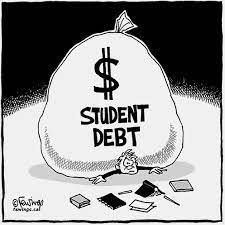
Educational Assistance Programs Can Help Pay Workers' Student Loans! Employers that offer educational assistance programs can ALSO use those programs to help pay their employees' student loans. Traditionally, education assistance programs are used to pay for books, equipment, supplies, fees, tuition and other educational expenses for the employee. THESE PROGRAMS CAN NOW ALSO BE USED TO PAY PRINCIPAL AND INTEREST ON AN EMPLOYEE'S QUALIFIED EDUCATION LOANS. The tax-free benefit is up to $5,250 per employee per year. Any assistance provided above $5,250 is taxable to the employee as wages. This benefit is available until December 31, 2025. 🤓